

Living paycheck to paycheck affects nearly 78% of American workers, creating constant financial stress and anxiety about making ends meet. If you’re struggling to cover basic expenses, facing unexpected bills with no savings cushion, or wondering where your money disappears each month, you’re not alone—and more importantly, there’s a proven path forward.
This comprehensive guide will show you exactly how to create a realistic monthly budget plan that works for families with limited income, helping you break the paycheck-to-paycheck cycle and build financial security step by step.
Understanding Your Current Financial Situation

Before creating any budget plan, you need a clear picture of where you stand financially. Many families living paycheck to paycheck avoid looking at their finances because it feels overwhelming, but this awareness is your first step toward positive change.
Calculate Your Monthly Take-Home Income
Start by determining exactly how much money hits your bank account each month after taxes and deductions. If you have irregular income from hourly work or side hustles, calculate an average based on the past three to six months. Use your lowest-earning months as your baseline to avoid overestimating.
Track Every Expense for 30 Days
Before building your budget, spend one month tracking every single expense—from mortgage payments to coffee purchases. Use a simple notebook, spreadsheet, or free budgeting apps like Mint or EveryDollar. This reveals spending patterns you might not realize exist and shows exactly where your money goes.
The Zero-Based Budget Method: Best for Paycheck-to-Paycheck Families
The zero-based budgeting method is particularly effective for families with tight finances because it assigns every dollar a specific purpose before the month begins. Unlike traditional budgets that might leave room for “discretionary spending,” this approach ensures you’re intentional with every cent.
How Zero-Based Budgeting Works
With this method, your income minus your expenses should equal zero. This doesn’t mean spending everything—it means allocating every dollar to a category, including savings. If you earn $3,500 monthly, you assign all $3,500 to specific categories: housing, food, transportation, debt, savings, etc.
This approach prevents the common problem of money “disappearing” because you’ve already decided where it goes before you receive your paycheck.
The 50/30/20 Budget Rule Adapted for Limited Income
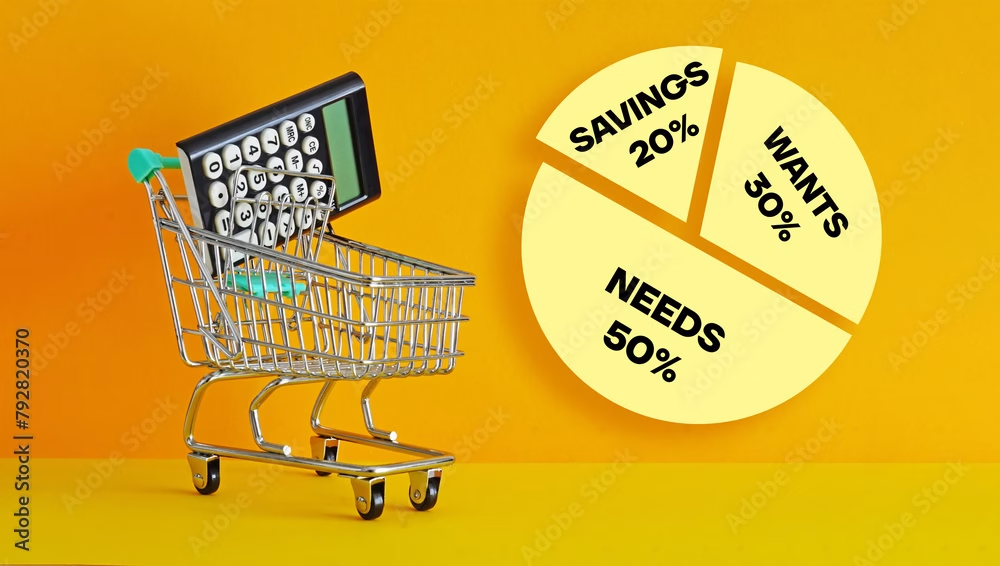
While the traditional 50/30/20 rule suggests allocating 50% to needs, 30% to wants, and 20% to savings, families living paycheck to paycheck often need to adjust these percentages. A more realistic adaptation might be 70/20/10 or even 80/15/5 initially.
Essential Needs (70-80%)
This category covers non-negotiable expenses: rent or mortgage, utilities, groceries, transportation, insurance, minimum debt payments, and childcare. If your needs exceed 80% of income, you’ll need to explore ways to reduce these costs, which we’ll address later.
Wants (15-20%)
Even on a tight budget, allocating some money to wants prevents burnout and deprivation mentality. This might include streaming services, dining out occasionally, hobbies, or entertainment. Start small but don’t eliminate this category entirely.
Savings and Debt Repayment (5-10%)
Begin with whatever you can manage, even if it’s just $25 monthly. This builds the habit and creates momentum. As your financial situation improves, gradually increase this percentage.
Priority-Based Budgeting: The Four Walls Method
When money is extremely tight, the Four Walls method helps you prioritize essentials first. This budgeting approach ensures you cover survival needs before anything else.
The Four Walls are:
- Food – Groceries to feed your family
- Utilities – Electricity, water, heat, and essential phone service
- Shelter – Rent or mortgage payments
- Transportation – Gas or public transit to get to work
After securing these four categories, allocate remaining funds to other necessities like insurance, medications, and minimum debt payments. Everything else comes after these non-negotiables are covered.
Building Your Family Budget: Step-by-Step Process
Step 1: List All Income Sources
Include your salary, your partner’s income, child support, government assistance, side hustle earnings, and any other regular money coming in. Be conservative with variable income estimates.
Step 2: Categorize Your Expenses
Create categories that match your lifestyle:
- Housing (rent/mortgage, insurance, maintenance)
- Utilities (electricity, water, gas, internet, phone)
- Food (groceries, school lunches)
- Transportation (car payment, insurance, gas, maintenance)
- Healthcare (insurance, medications, copays)
- Debt payments (credit cards, student loans, personal loans)
- Childcare and education
- Personal care (haircuts, toiletries)
- Clothing
- Entertainment and recreation
- Emergency fund contributions
- Miscellaneous
Step 3: Assign Dollar Amounts
Based on your expense tracking, assign realistic amounts to each category. Be honest—underestimating leads to budget failure.
Step 4: Subtract Expenses from Income
If you have money left over, assign it to savings or extra debt payments. If you’re negative, you need to cut expenses or increase income.
Step 5: Implement the Envelope System
For variable expenses like groceries, gas, and entertainment, consider using cash envelopes. When the envelope is empty, spending stops for that category until next month. This physical limitation prevents overspending better than digital tracking for many families.
Strategies to Reduce Essential Expenses

When living paycheck to paycheck, reducing fixed costs creates immediate breathing room in your budget.
Housing Costs
If rent or mortgage exceeds 30% of income, explore options like downsizing, taking in a roommate, negotiating rent, or refinancing your mortgage. Look into housing assistance programs in your area.
Grocery Budget Optimization
Plan meals around weekly sales, buy generic brands, use coupons strategically, buy in bulk for non-perishables, reduce meat consumption, eliminate food waste by meal prepping, and shop with a list to avoid impulse purchases. A family of four can eat well on $400-600 monthly with strategic shopping.
Utility Savings
Contact utility companies about budget billing plans, energy assistance programs, or payment plans. Simple changes like adjusting the thermostat, using LED bulbs, unplugging devices, and fixing water leaks can reduce bills by 10-30%.
Transportation Solutions
Consider carpooling, using public transportation, biking when possible, or maintaining your vehicle properly to prevent expensive repairs. Shop around for cheaper car insurance annually.
Building an Emergency Fund (Even on Tight Budget)
Financial experts recommend 3-6 months of expenses in emergency savings, but that feels impossible when living paycheck to paycheck. Start smaller.
The Micro-Savings Approach
Begin with a goal of $500-1,000. This covers most common emergencies like car repairs or medical copays. Save $25 biweekly, and you’ll reach $650 in one year. Use these strategies:
- Set up automatic transfers to savings on payday
- Save windfalls like tax refunds, bonuses, or gift money
- Use cashback apps and deposit rewards to savings
- Implement a spare change jar
- Try a savings challenge like saving $1 the first week, $2 the second, etc.
Managing Debt While Budgeting
Debt payments often consume a significant portion of income for families living paycheck to paycheck. Balance minimum payments with strategic debt reduction.
The Debt Avalanche vs. Debt Snowball
The avalanche method pays off highest-interest debt first, saving money on interest. The snowball method pays off smallest balances first, creating psychological wins. Choose the method that keeps you motivated.
Negotiate with Creditors
If you’re struggling with payments, contact creditors before missing payments. Many offer hardship programs, reduced interest rates, or payment plans. Being proactive protects your credit score and relationships with lenders.
Income-Boosting Strategies for Budget Relief
Sometimes reducing expenses isn’t enough—you need to increase income. Consider these options:
- Ask for a raise or promotion at your current job
- Take on overtime hours when available
- Start a side hustle (freelancing, delivery driving, tutoring, pet sitting)
- Sell unused items online
- Rent out a parking space or spare room
- Apply for government assistance programs you qualify for (SNAP, WIC, LIHEAP, Medicaid)
Free Tools and Resources for Budget Management
Take advantage of free resources to support your budgeting journey:
- Budgeting Apps: Mint, EveryDollar, Goodbudget, PocketGuard
- Financial Education: MyMoney.gov, National Financial Educators Council
- Assistance Programs: Benefits.gov helps find programs you qualify for
- Community Resources: Local churches, food banks, utility assistance programs
Common Budget Mistakes to Avoid
Being Too Restrictive
Overly strict budgets lead to burnout and binge spending. Allow small rewards and flexibility.
Not Planning for Irregular Expenses
Budget for annual or semi-annual expenses like car registration, insurance premiums, or school fees by setting aside money monthly.
Giving Up After One Bad Month
Budget failure is normal when starting. Adjust and try again rather than abandoning the system.
Not Involving the Whole Family
Everyone affected by the budget should understand and participate in it. Hold family meetings to discuss financial goals and progress.
Measuring Progress and Adjusting Your Budget

Review your budget weekly for the first month, then monthly thereafter. Track these success indicators:
- Are you covering all Four Walls consistently?
- Is your emergency fund growing, even slowly?
- Are you avoiding new debt?
- Do you feel less financial stress?
- Are you meeting your assigned spending limits?
Adjust categories as needed based on real spending patterns. Budgets are living documents that evolve with your circumstances.
Moving Beyond Paycheck to Paycheck
Breaking the cycle takes time—typically 6-12 months of consistent budgeting before most families notice significant improvement. Stay committed to the process, celebrate small wins, and remember that every dollar saved or earned extra moves you closer to financial stability.
Your monthly budget plan isn’t about deprivation—it’s about making conscious choices with your money that align with your family’s values and goals. By implementing these strategies consistently, you’re not just managing money; you’re building a foundation for long-term financial security and peace of mind.
Start today with one small step: track your expenses for the next week. Then build from there. You’ve got this.